How to View Google Ranking: The Real-time Guide to Tracking Your Search Position in 2026
The short answer: Strategyc is a content and visibility engine for businesses that need to own their search presence. The view google ranking process reveals your current position, traffic potential, device-specific performance, and competitive gaps. Success in view google ranking comes down to accurate tracking methods, local versus global context, and AI search visibility. According to BrightEdge, 53% of all trackable website traffic originates from organic search. If your content isn't appearing in these AI-generated responses, you need a systematic approach to AI search optimization that goes beyond traditional SEO tactics.
Most business owners check their Google ranking the wrong way. They type their keyword into Google, scroll through results, and assume whatever they see reflects reality. It doesn't. Your location, search history, device, and dozens of personalization signals skew what you see. The business three blocks away sees different results. The mobile user in the next city sees something else entirely. Understanding how to view google ranking accurately matters more in 2026 than ever before. Google's algorithm updates 500-600 times per year. AI Overviews now trigger on 50% of queries, fundamentally changing what "ranking" even means. Your competitor might hold position three in traditional results while dominating the AI Overview citations that get 61% higher click-through rates. This guide covers the methods that actually work: Google Search Console for historical performance, real-time rank checkers for instant verification, local tracking for geographic variations, and AI search monitoring for the visibility that matters most. You'll learn what the numbers mean, why they fluctuate, and how to turn ranking data into traffic and revenue.What Google Ranking Actually Measures (and What It Misses)
Position Number Versus Actual Visibility
When you view google ranking data, the position number tells part of the story. Position one averages 27.6% organic click-through rate, according to Backlinko's 2024 analysis of 5 million search results. Position two drops to 15.8%. Position ten hovers around 2.4%. But these averages ignore SERP features that dominate modern search results. A featured snippet at position zero can steal clicks from the traditional number one result. The local map pack occupies prime screen space for geographic queries. People Also Ask boxes, image carousels, video results, and shopping ads push organic listings down the page. Your business might rank third for "emergency plumber Denver" but appear below the fold on mobile devices, where 63% of Google searches now happen. AI Overviews complicate this further. When Google's generative AI answers a query directly, it cites 3-5 sources in the response. Data from DemandSage shows AI Overviews cause a 61% drop in organic CTR for traditional results. If your content gets cited in the Overview, you win. If not, your ranking position matters far less than it did two years ago.Average Position Versus Real-Time Rank
Google Search Console reports "average position" across all impressions for a given query. If your page ranks fifth in Seattle, eighth in Miami, and third in Chicago, Search Console might show an average position of 5.3. That number obscures geographic performance gaps that cost you customers in specific markets. Real-time rank checkers query Google's live search results for a specific keyword, location, and device. They show what a user in Dallas sees right now when searching "commercial HVAC repair" on an iPhone. This granular data reveals opportunities Search Console's averages hide. According to Whitespark's 2024 Local Search Ranking Factors study, 46% of all Google searches have local intent. If you serve multiple cities, average position data is almost meaningless.How to View Google Ranking Using Search Console
Setting Up Performance Reports for Ranking Data
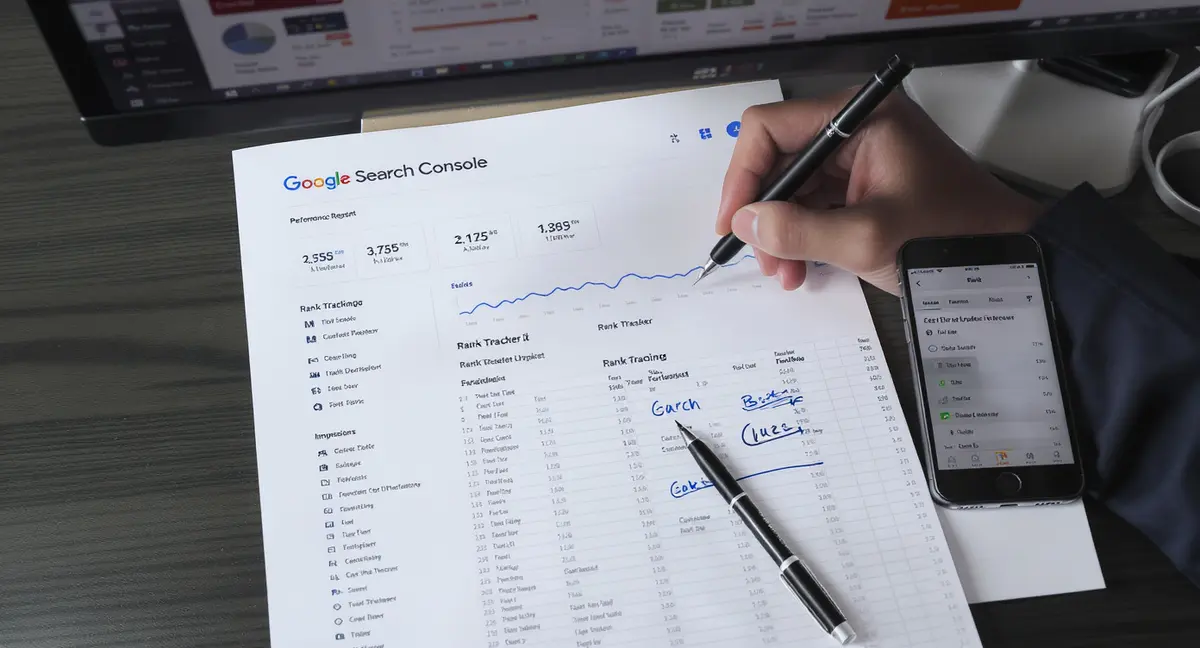
Google Search Console remains the most reliable free method to view google ranking trends over time. Navigate to Performance > Search Results to see queries, pages, countries, and devices driving impressions and clicks. The "Average position" metric shows where your pages typically appear for each query. Filter by date range to spot ranking changes. Compare the last 28 days to the previous period. A position drop from 4.2 to 7.8 for a high-volume keyword signals a problem. Drill into the specific page to see if traffic declined proportionally. Sometimes position drops don't hurt traffic if click-through rate improves or search volume increases. Use the "Queries" tab to identify terms where you rank between positions 5-15. These represent quick-win opportunities. Content already ranks on page one or two but needs optimization to break into the top three positions where 75% of clicks concentrate. Search Engine Journal's research confirms that SEO leads close at 14.6%, compared to 1.7% for outbound leads. Moving from position eight to position three can double qualified traffic overnight.Understanding Search Console Position Limitations
Search Console averages position data across thousands of impressions. If your page appeared in position three for 100 searches and position twenty for 10 searches, the average might show 4.5. That doesn't mean you consistently rank 4-5. It means performance varies wildly by user, location, and context. The data also lags 24-48 hours. You won't see today's rankings in Search Console until tomorrow or the day after. For competitive keywords where positions shift daily, this delay matters. A competitor's new content or algorithm update could drop your rankings hours ago, but Search Console won't confirm it yet. Search Console doesn't track AI Overview citations, voice search results, or featured snippet appearances as separate metrics. You see traditional position data only. Since 50% of queries now trigger AI features, you're missing half the visibility picture. Platforms like enterprise SEO platform report that AI-sourced visitors convert at 27% compared to 2.1% from traditional search. Tracking only classic rankings underestimates your real opportunity.| Factor | What it is | Impact |
|---|---|---|
| Search personalization | Google customizes results based on user history and location | High - can shift position ±5 spots |
| Device type | Mobile versus desktop rankings often differ greatly | High - 63% of searches are mobile |
| SERP features | Featured snippets, local pack, AI Overviews alter visibility | High - can reduce CTR by 61% |
| Geographic location | Rankings vary by city, state, and country for most queries | Medium to High for local businesses |
| Data freshness | How quickly the tracking method updates after rank changes | Medium - matters for competitive niches |
Real-Time Methods to View Google Ranking Instantly
Manual Incognito Searches and Their Accuracy
The simplest way to view google ranking is typing your keyword into Google while logged out or in incognito mode. This removes some personalization signals like search history and account preferences. But it doesn't eliminate location-based personalization, which Google determines from your IP address. Open an incognito window, search your target keyword, and scan results. Note your position. Then change your search settings to a different location using the "Tools" menu or by appending location parameters to the URL. Compare results. A roofing company in Austin might rank third for "roof repair" when searched from Austin but disappear entirely from results when searched from Houston. This method works for quick spot checks but fails at scale. Manually searching 50 keywords across 10 locations on both mobile and desktop would take hours. You also can't track changes over time without manually recording results daily. For businesses monitoring more than a handful of keywords, manual searches waste time that should go toward content creation and optimization.Using Free Rank Checker Tools Effectively
Free rank tracking tools query Google's live search results and return your position for a specific keyword, domain, location, and device. Tools like the ones from keyword-tools.org and Seobility let you enter a keyword and URL, select a country and device type, then see your current ranking within seconds. These tools bypass personalization by querying Google from neutral IP addresses and clean browser profiles. Results reflect what a typical user in the selected location would see. You can check rankings from specific cities or regions, as well as mobile or desktop rankings, without manually changing your VPN or device. Limitations include query caps (most free tools allow 5-20 checks per day) and lack of historical tracking. You see today's ranking but can't compare it to last week or last month without manually logging results. Free tools also rarely track SERP features, AI Overviews, or voice search visibility. They show traditional organic position only.Local and Device-Specific Ranking Variations
Why Rankings Change by City and Region
Google personalizes results based on the searcher's physical location for any query with local intent. Search "dentist" from Phoenix, and you see Phoenix dentists. Search the same term from Boston, and you see Boston dentists. This makes sense for obvious local queries. What surprises most business owners is how many seemingly non-local keywords also vary by location. According to Whitespark's Local Search Ranking Factors study, 46% of all Google searches have local intent. That includes terms like "best CRM software" or "commercial insurance quote" where users prefer providers they can meet in person or that serve their specific state's regulations. Google detects this intent and adjusts rankings to prioritize businesses near the searcher. If you serve multiple markets, you must view google ranking separately for each city. A law firm with offices in Tampa, Orlando, and Jacksonville needs to track "personal injury lawyer" rankings in all three cities. Ranking fifth in Tampa but twentieth in Orlando means your Orlando office gets almost no organic leads. The fix might be location-specific content, separate landing pages, or Google Business Profile optimization for each location.Mobile Versus Desktop Ranking Differences
Google switched to mobile-first indexing in 2019, meaning it primarily uses the mobile version of your content for ranking. But mobile and desktop rankings still differ because Google serves different SERP layouts and features by device. Mobile results prioritize local pack, maps, and quick-answer features. Desktop results show more traditional organic listings. A page might rank seventh on desktop but third on mobile if it loads fast, has clean mobile formatting, and targets a query where mobile users dominate. Conversely, desktop rankings might outperform mobile if your page includes complex tables, PDFs, or content that's hard to consume on small screens. Check both when you view google ranking data. If 70% of your traffic comes from mobile devices, your mobile ranking matters far more than desktop position. Use rank tracking tools that let you toggle between device types. Compare mobile and desktop performance for your top 20 keywords. Prioritize optimization for the device that drives the most revenue.Tracking Rankings in AI Search and Voice Results
How AI Overviews Change Ranking Visibility
Google's AI Overviews appear at the top of search results for roughly 50% of queries, according to DemandSage's 2025 analysis. These generative AI responses synthesize information from multiple sources and cite 3-5 links as references. Getting cited in an AI Overview can drive major traffic, but traditional rank tracking tools don't monitor these citations. When you view google ranking using standard methods, you see where your page appears in the traditional organic results below the AI Overview. But if Google's AI cites your content in the Overview itself, you've achieved a visibility position that didn't exist two years ago. BrightEdge reports that early adopters optimizing for AI search saw 120x impression increases and 800% year-over-year traffic growth from large language models. AI Overview citations favor content with clear structure, original data, and authoritative sourcing. Google's AI extracts specific facts, statistics, and expert quotes to build its responses. Pages that provide these elements in scannable formats (bullet lists, tables, concise paragraphs) get cited more often. Monitoring whether your content appears in AI Overviews requires manual checking or specialized tools that parse AI-generated responses.Voice Search and Featured Snippet Optimization
Voice search queries differ from typed searches. Users ask complete questions: "What's the best time to plant tomatoes in Texas?" instead of typing "tomato planting Texas." Google often pulls voice search answers from featured snippets, which appear in position zero above traditional organic results. To view google ranking for voice queries, you need to track featured snippet ownership for question-based keywords. Use Google Search Console to identify queries phrased as questions (who, what, when, where, why, how). Check whether your content owns the featured snippet for these terms. If a competitor holds the snippet, you're losing voice search traffic even if you rank second or third in traditional results. Featured snippets come in three formats: paragraph (40-60 word answer), list (steps or items), and table (comparison data). Structure your content to match the format Google already uses for each query. If the current snippet is a numbered list, reformatting your content as a clear step-by-step list increases your chances of replacing the current snippet owner.Ready to take the next step with Strategyc?
Our team is ready to help you achieve your goals. Get Your Free Scan. A position drop from 4.2 to 7.8 for a high-volume keyword signals a problem that requires immediate investigation into what caused the Google ranking drop and how to recover quickly.
What Ranking Data Tells You About Business Performance
Connecting Position to Traffic and Revenue
Ranking position correlates with traffic, but the relationship isn't linear. Moving from position ten to position five might double traffic. Moving from position five to position three might triple it. Moving from position three to position one might only add 50% more traffic if SERP features dominate the top of the page. Calculate the traffic value of ranking improvements before investing in optimization. Use Search Console to find your current average position and monthly impressions for a keyword. Then estimate clicks at different positions using industry CTR benchmarks. If you rank eighth with 10,000 monthly impressions, you're getting roughly 240 clicks (2.4% CTR). Moving to position three (15.8% CTR) would yield 1,580 clicks. That's 1,340 additional monthly visitors from one keyword. Multiply those additional visitors by your conversion rate and average customer value to estimate revenue impact. If your site converts at 3% and your average customer is worth $500, moving from position eight to position three on that single keyword would generate approximately $20,100 in additional monthly revenue. That math justifies meaningful content investment.Using Ranking Trends to Spot Algorithm Updates
When you view google ranking data over time, sudden position drops across multiple keywords often indicate an algorithm update. Google rolls out broad core updates 2-4 times per year, plus hundreds of smaller ranking adjustments. Most updates go unannounced. Track your top 20 keywords weekly. If 60% of them drop 3+ positions within a 48-hour period, an algorithm update likely affected your site. Cross-reference the timing with SEO news sources that track confirmed Google updates. Knowing you were hit by the March 2024 Helpful Content Update helps you diagnose the problem (thin AI-generated content, lack of expertise signals) rather than chasing random optimization theories. Algorithm recovery takes 3-6 months on average. Google needs to recrawl your improved content, reassess quality signals, and adjust rankings. Businesses that track rankings closely can spot problems within days of an update and start fixing issues while competitors remain unaware. That head start compounds over time. According to CMI's 2024 research, companies that blog get 55% more website visitors than those that don't, largely because consistent content publishing helps recover from algorithm volatility faster.Building an Owned Ranking Tracking System
Setting Up Automated Daily Rank Monitoring
Manually checking rankings wastes time. Automated rank tracking software queries Google daily for your target keywords, logs position data, and alerts you to meaningful changes. You see exactly when rankings improve or decline, which pages are affected, and how your visibility compares to competitors. Most rank tracking platforms let you segment keywords by topic, location, or business goal. Track brand terms separately from commercial keywords. Monitor local rankings for each city you serve. Flag high-value keywords that drive the most revenue so you can prioritize optimization when they slip. Daily tracking reveals patterns manual checks miss. You might notice rankings always drop on Tuesdays when a competitor publishes new content. Or you might see seasonal fluctuations where your "tax preparation" keywords surge in January but crater in July. These takeaways inform content calendars, publishing schedules, and competitive response strategies.Integrating Ranking Data with Traffic and Conversion Metrics
Ranking position means nothing without traffic. Traffic means nothing without conversions. Connect your rank tracking data to Google Analytics and your CRM to measure business outcomes. When you view google ranking improvements, you should simultaneously see traffic increases, lead form submissions, and closed deals. Set up goals in Google Analytics for key conversion actions: contact form submissions, phone calls, quote requests, purchases. Tag these conversions with UTM parameters or track them by landing page. When a keyword moves from position seven to position four, check whether traffic from that keyword increased proportionally and whether that traffic converted at expected rates. Sometimes rankings improve but traffic doesn't because search volume declined or Google added SERP features that reduced click-through rates. Other times traffic increases but conversions drop because the keyword attracts unqualified visitors. Integrated tracking reveals these disconnects so you can adjust strategy rather than blindly chasing rankings that don't generate revenue.The Bottom Line on Viewing Google Rankings Accurately
Tracking how you rank on Google requires more than typing keywords into a search bar. Personalization, location, device type, and AI features all affect what users see. Google Search Console provides historical averages but misses real-time changes and AI visibility. Free rank checkers offer instant snapshots but lack tracking depth. The businesses winning organic search in 2026 use multiple methods: Search Console for trends, real-time checkers for verification, local tracking for geographic markets, and AI monitoring for the visibility that increasingly matters most. Position numbers matter less than traffic and revenue. A featured snippet at position zero can outperform a traditional position one result. An AI Overview citation can drive more qualified traffic than ranking third in organic results. Focus on the metrics that move your business forward. Track rankings to identify opportunities and problems, but measure success by the leads and customers that organic search delivers.Frequently Asked Questions
Frequently Asked Questions
How often should I view Google ranking data for my business?
Check rankings weekly for your top 10-20 keywords using automated tracking software. Manual checks waste time and miss trends. Daily automated tracking catches algorithm updates, competitor movements, and seasonal fluctuations immediately. Review complete ranking reports monthly to inform content strategy and identify optimization opportunities. The fix might be location-specific content, separate landing pages, or Google Business Profile optimization for each location. A roofing company in Austin might rank third for "roof repair" when searched from Austin but needs strong roofing reviews and local signals to maintain visibility across multiple Texas markets.
Why does my Google ranking look different when I search versus what tools show?
Google personalizes results based on your search history, location, and device. Tools query from neutral profiles and specific locations to show what typical users see. Your logged-in, personalized view doesn't reflect reality for most searchers. Always use incognito mode or rank tracking tools for accurate position data. For roofing contractors specifically, understanding these geographic ranking variations is essential to building a roofing marketing strategy that generates leads in every service area.
Can I track my rankings in AI Overviews and ChatGPT search results?
Yes, but it requires different methods than traditional rank tracking. Monitor whether your content gets cited in Google's AI Overviews by manually checking high-volume queries or using specialized AI visibility tools. For ChatGPT and Perplexity, track brand mentions and source citations. AI search visibility increasingly matters more than traditional position.
What does it take to own my visibility infrastructure instead of renting it monthly?
Owning visibility means installing a content and publishing system that continues producing results after the initial build. This requires structured content frameworks, AI-optimized article formats, and distribution systems for Google, AI search, and voice. Unlike agency retainers that stop working when you stop paying, owned systems compound value over time.
How do I measure ROI from organic content when rankings fluctuate constantly?
Track traffic and conversions by landing page, not just rankings. Use Google Analytics to measure organic sessions, goal completions, and revenue by page. Calculate customer acquisition cost from organic versus paid channels. Businesses typically see 3-6 month lag between content publication and meaningful traffic, but SEO leads close at 14.6% versus 1.7% for outbound.