SEO for Your Business: The 2026 Playbook for Visibility That Compounds
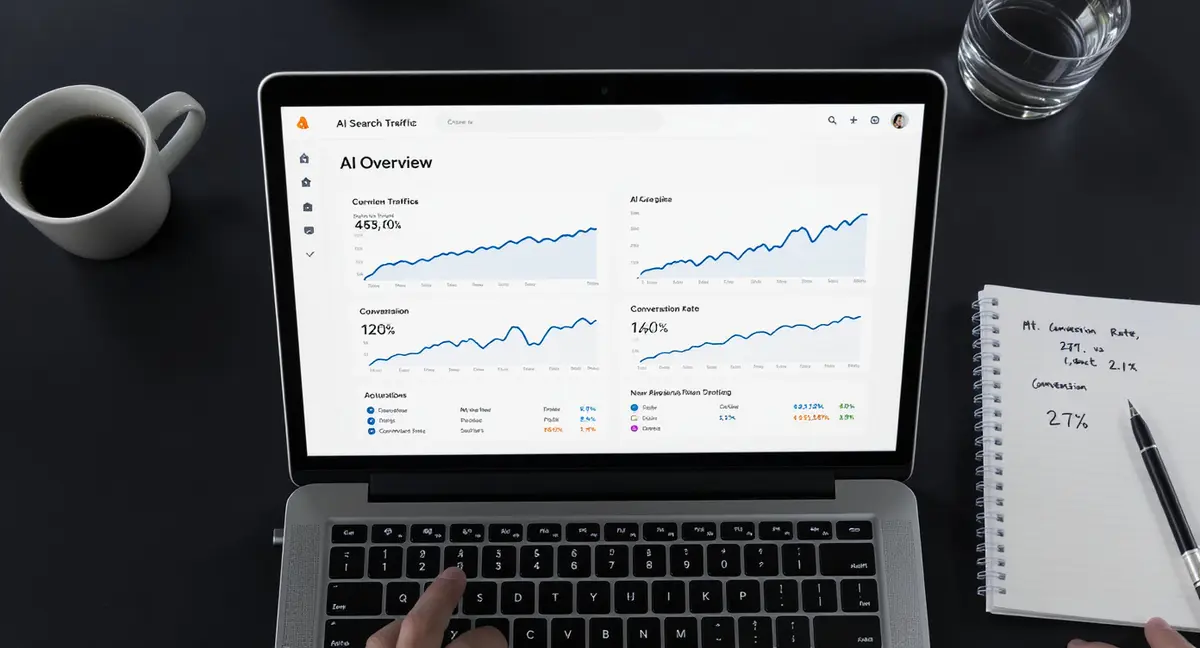
The short answer: SEO for your business in 2026 means building visibility across AI search engines, traditional rankings, and voice assistants simultaneously. The modern SEO strategy combines technical infrastructure, AI-optimized content, and owned systems that compound over time. Success comes down to content authority, technical foundation, and system ownership. Early adopters of AI-optimized content see 120x impression increases and 800% year-over-year traffic growth from large language models (Search Engine Journal, 2025).
SEO for your business isn't what it was two years ago. Google's AI Overviews now appear in 50% of search queries, and those AI-generated answers pull from just 3-5 sources per query (DemandSage, 2025). If your business isn't in that group, your competitor is. Most businesses discover they're invisible in AI answers only after competitors have already captured the citations, which is why AI search optimization now requires specialized infrastructure built before the window closes.
The old playbook, monthly retainers, keyword stuffing, and hoping for page-one rankings, no longer works. AI search engines like ChatGPT, Perplexity, and Google's own AI Overviews are reshaping how customers find businesses. Voice assistants answer questions without showing a list of links. Traditional organic click-through rates dropped 61% when AI Overviews launched (DemandSage, 2025).
But here's what most business owners miss: early adopters of AI-optimized content are seeing 120x impression increases and 800% year-over-year traffic growth from large language models (Search Engine Journal, 2025). Visitors who arrive through AI-sourced answers convert at 27%, compared to 2.1% from traditional search (SingleGrain, 2025).
This article breaks down how SEO for your business works in 2026, what's changed, what still matters, and how to build visibility infrastructure you own instead of rent. You'll see the specific tactics that drive results, the mistakes that waste budget, and the systems that keep producing long after you stop paying for them.
Why SEO for Your Business Matters More (and Works Differently) in 2026
The economics of search visibility shifted dramatically in the past 18 months. Businesses that invested in content infrastructure before AI search went mainstream now dominate their categories. Those that waited are scrambling to catch up.
The AI Search Takeover Is Already Here
Google's AI Overviews launched in May 2024. Within six months, they appeared in half of all searches. That's not a pilot program, it's the new default.
AI answers don't just push organic results down the page. They fundamentally change user behavior. When an AI Overview provides a direct answer, 61% fewer users click through to websites (DemandSage, 2025). The businesses that do get cited in those answers see massive traffic lifts. The ones that don't become invisible.
ChatGPT now handles over 200 million daily active users (OpenAI, 2024). Perplexity processes millions of queries daily. These aren't experimental tools, they're primary research channels. And they're forming their knowledge bases right now, pulling from content published in 2024-2026.
If your business isn't producing content structured for AI extraction, you're not competing for tomorrow's traffic. You're already losing today's.
Traditional SEO Metrics No Longer Tell the Full Story
Page-one rankings still matter, but they're not the only game. A business can rank #3 for a high-value keyword and get zero traffic if an AI Overview answers the query above the fold.
The new visibility metrics include: AI citation frequency (how often your content appears in ChatGPT, Perplexity, and AI Overview answers), voice search inclusion (whether Siri, Alexa, and Google Assistant cite your business), and schema-boosted visibility (whether your structured data makes it into rich results and knowledge panels).
According to research from Princeton and Georgia Tech presented at KDD 2024, content optimized for AI extraction sees 30-40% higher inclusion rates in AI-generated answers. That optimization includes schema markup, factual density with citations, clear section-based formatting, and expert-attributed content.
Businesses tracking only keyword rankings are measuring yesterday's game. The companies winning in 2026 track where they appear across the entire search ecosystem, Google, AI platforms, and voice assistants.
The Core Components of SEO for Your Business That Still Drive Results
Despite the AI revolution, certain fundamentals haven't changed. Technical infrastructure, content quality, and authority signals still determine whether search engines trust your business enough to show it to customers.
| Factor | What it is | Impact |
|---|---|---|
| Technical Foundation | Site speed, structured data, mobile-first indexing | 1-second delay reduces conversions by 7% |
| Content Authority | Original research, expert attribution, cited sources | Sites with original research earn 4x more backlinks |
| System Ownership | Installed publishing workflows on your infrastructure | Compounds value; no monthly dependency |
| AI Optimization | Content structured for extraction by LLMs | 30-40% higher inclusion in AI answers |
| Consistent Publishing | Regular content cadence over time | Consistent bloggers get 55% more visitors |
Technical Foundation: Speed, Structure, and Crawlability
Google's Core Web Vitals remain confirmed ranking factors. Sites that load in under 2.5 seconds (Largest Contentful Paint) and respond to user input within 200 milliseconds (Interaction to Next Paint) rank higher than slower competitors. The conversion rate difference alone justifies the investment, but the full economics become clear when you examine whether SEO worth it for businesses operating on constrained budgets.
But speed isn't just about rankings. A one-second delay in page load time reduces conversions by 7% (Portent, 2024). For a business doing $100,000 in monthly online revenue, that's $84,000 lost annually.
Structured data markup tells search engines exactly what your content means. A local service business with proper LocalBusiness schema, Service schema, and FAQ schema gets pulled into rich results, voice answers, and AI citations more frequently than competitors without markup.
Mobile-first indexing is no longer optional. Google indexes the mobile version of your site first. If your mobile experience is broken, your rankings suffer regardless of how good your desktop site looks.
Content That Answers Real Questions With Real Expertise
Google's Helpful Content Update (September 2023) specifically targeted aggregated content with no original observation. The algorithm now rewards first-hand expertise over rewritten competitor articles.
E-E-A-T (Experience, Expertise, Authoritativeness, Trustworthiness) is Google's quality rater framework. While not a direct ranking signal, it shapes what content ranks. Articles with named authors, cited sources, and original data outperform anonymous blog posts.
Sites with original research earn 4x more backlinks than those without (Backlinko, 2024). Those backlinks compound authority over time. A single well-researched article published in 2024 can still drive traffic in 2027 if it establishes genuine expertise.
For SEO for your business to work long-term, content must provide value that competitors can't easily replicate. That means case studies from your actual projects, data from your customer base, and observations from your team's experience.
Find out if your content is structured for AI search visibility. Book a 30-minute scan.
The Biggest Mistakes That Kill SEO for Your Business
Most businesses don't fail at SEO because they lack budget. They fail because they invest in the wrong things or trust the wrong partners.
Paying for Services You Don't Own
The average SEO agency retainer runs $1,500-$5,000 per month for small and mid-sized businesses (Search Engine Journal, 2024). Over three years, that's $54,000 to $180,000. When you stop paying, the work stops. The content lives on the agency's accounts. The processes stay in their systems. You start from zero.
Agency churn averages 38% annually (Focus Digital, 2025). That means more than one in three businesses switch providers every year. Each switch resets progress. The new agency audits what the old one did, identifies "problems," and starts over. You pay twice for the same work.
Only 8% of marketers feel confident they can measure ROI from their marketing spend (Firework, 2025). That's not because ROI is unmeasurable, it's because agencies gatekeep data and reporting. When you can't see what you're getting, you can't make informed decisions about what to keep funding.
Platforms like Strategyc take a different approach: they install content and visibility systems on your infrastructure. You own the workflows, the AI accounts, the content, and the data. The system keeps producing after the engagement ends.
Chasing Algorithm Updates Instead of Building Authority
Google releases multiple core updates per year. Businesses that panic and rewrite content after every update waste time and money. The sites that weather algorithm changes are the ones built on genuine authority.
Authority comes from consistent publishing, cited sources, expert attribution, and backlinks from other authoritative sites. A business that publishes one high-quality article per week for 52 weeks builds more authority than one that publishes 52 articles in a single month and then goes silent. Building this infrastructure requires the right technology stack, and the specific SEO tools you choose determine whether your system compounds or creates dependency.
Companies that blog consistently get 55% more website visitors than those that don't (Content Marketing Institute, 2024). That's not because of any single article, it's the compounding effect of a content library that grows every week.
SEO for your business works when you treat it as infrastructure, not a campaign. Campaigns end. Infrastructure compounds.
How to Build SEO for Your Business That You Own
Ownership means control. It means the ability to measure, modify, and scale without asking permission or paying monthly fees. Check out how to structure SEO as an asset you own.
Install a Publishing System, Not a Service Contract
A publishing system includes: content workflows that run on your infrastructure, AI tools configured under your accounts, quality gates that ensure every article meets standards, and distribution processes that push content to your site, social channels, and email list.
The Content & Visibility Engine is one example of an installed system. It takes 4-6 weeks to build, then the business controls publishing pace and content direction. No monthly retainer. No dependency.
Installed systems cost more upfront than monthly services, but the economics flip after 6-12 months. A $15,000 system that produces content for three years costs $417 per month amortized. A $3,000/month agency costs $108,000 over the same period, and you own nothing when it ends.
The key difference: systems are designed to run without ongoing vendor involvement. You're not buying labor hours. You're buying infrastructure.
Structure Content for AI Extraction, Not Just Keywords
AI models extract information differently than humans. They look for clear section headers, factual statements with citations, structured data markup, and expert attribution.
Content optimized for AI includes: H2/H3 headers that match common question patterns, schema markup (Article, FAQPage, HowTo, LocalBusiness), cited sources for every major claim, and FAQ sections that directly answer voice search queries.
Research from Georgia Tech and Princeton (KDD, 2024) found that content with these elements gets cited 30-40% more often in AI-generated answers. That's not a small edge, it's the difference between visibility and invisibility.
For SEO for your business to work in 2026, every article must be structured for both human readers and AI extraction. That means clear formatting, factual density, and markup that tells AI models exactly what each section means.
Ready to take the next step with Strategyc?
Our team is ready to help you achieve your goals. .
What Results Look Like When SEO for Your Business Works
Results don't show up overnight. But when SEO infrastructure is built correctly, the trajectory is unmistakable.
The 6-12 Month Visibility Curve
Most businesses see initial traction within 90 days, a few articles ranking on page two, some long-tail keywords hitting page one, early AI citations in ChatGPT or Perplexity. Real momentum builds between months 6-12.
Organic search leads close at 14.6%, compared to 1.7% for outbound leads (Search Engine Journal, 2024). That's an 8.5x difference in conversion rate. A business generating 50 organic leads per month at 14.6% close rate gets 7.3 new customers. The same business generating 50 outbound leads gets 0.85 customers.
The compounding effect is what separates SEO from paid ads. A Google Ads campaign stops producing the moment you stop paying. An article published in January 2026 can still drive traffic in January 2028 if it ranks well and gets cited by AI models. Service businesses with geographic constraints face a different visibility challenge, which is why local SEO requires schema markup and citation strategies that national brands can ignore.
B2B buyers consume 3-7 pieces of content before engaging sales (Demand Gen Report, 2024). A business with 50+ published articles captures buyers at every stage of research. A business with five articles loses them to competitors with deeper libraries.
AI Search Visibility Drives Higher-Intent Traffic
Visitors arriving through AI-sourced answers convert at 27%, compared to 2.1% from traditional search (SingleGrain, 2025). That's a 12.8x difference in conversion rate.
Why the gap? AI answers pre-qualify visitors. When ChatGPT cites your business in response to a specific question, the user has already been told you're a credible source. They arrive with higher trust and clearer intent.
Early adopters of AI-optimized content report 120x impression increases and 800% year-over-year traffic growth from large language models (Search Engine Journal, 2025). Those aren't projections, they're results from businesses that started optimizing in 2024.
SEO for your business in 2026 means capturing traffic from Google, ChatGPT, Perplexity, AI Overviews, and voice assistants. The businesses winning across all channels are the ones that structured content for AI extraction from the start.
Where SEO for Your Business Is Heading in the Next 12-24 Months
The next wave of search evolution is already visible. Businesses that prepare now will dominate their categories. Those that wait will spend 2027 playing catch-up.
Voice Search Will Become the Default for Local Queries
Voice search adoption continues to accelerate. By 2027, more than 50% of local service queries will start with voice (Juniper Research, 2024). That includes "near me" searches, service requests, and business information lookups.
Voice assistants cite 1-3 sources per query, not ten blue links. If your business isn't in that group, you're invisible. Voice optimization requires: LocalBusiness schema with complete NAP data, FAQ content that matches natural language queries, and fast-loading mobile pages that voice assistants can parse.
The businesses that win voice search are the ones with structured, citation-rich content. Voice assistants don't guess, they pull from knowledge graphs and structured data. If your content isn't marked up correctly, it won't get cited.
AI Models Will Favor Businesses With Consistent Publishing Histories
AI models learn from patterns. A business that published 50 articles in 2024-2025 and then went silent looks less authoritative than one that publishes consistently every week.
The content libraries being built right now will form the foundation of AI knowledge bases for the next 3-5 years. AI models don't just index new content, they weight historical publishing patterns when determining authority.
That means the businesses publishing consistently in 2026 are building an authority moat that competitors will struggle to overcome in 2027-2028. SEO for your business isn't a short-term tactic. It's long-term infrastructure that compounds with every article published.
How to Choose the Right Approach for SEO for Your Business
Not every business needs the same SEO strategy. The right approach depends on your goals, timeline, and internal capacity.
Build In-House vs Install a System vs Hire an Agency
Building in-house requires: a content strategist ($70,000-$90,000/year), a writer or two ($50,000-$70,000 each), technical SEO expertise (contractor or full-time), and AI tool subscriptions ($200-$500/month). Total annual cost: $150,000-$250,000.
That works for businesses with $10M+ revenue and the internal capacity to manage a content team. For everyone else, it's overkill.
Hiring an agency costs $1,500-$5,000/month for small to mid-sized businesses. Over three years, that's $54,000-$180,000. You get ongoing work, but you don't own the system. When you stop paying, everything stops. Product-based businesses face unique technical requirements around structured data and category architecture, making ecommerce SEO fundamentally different from service or content site optimization.
Installing a system costs $10,000-$25,000 upfront depending on complexity. The system runs on your infrastructure. You control publishing pace. No monthly fees. The economics favor installed systems after 6-12 months.
What to Look for in an SEO Partner (If You're Not Building In-House)
If you're evaluating partners, ask these questions: Do I own the content, workflows, and accounts when the engagement ends? Can I measure exactly what I'm getting each month? Is the strategy built for AI search visibility, or just traditional rankings? What happens if I stop paying?
Avoid partners who: gatekeep data and reporting, require 12-month contracts with auto-renewal, can't show specific examples of AI citations they've generated, or position themselves as the only option.
The best partners install systems you own, provide transparent reporting, and design strategies that keep working after the engagement ends. SEO for your business should be infrastructure, not dependency.
The Bottom Line on SEO for Your Business
SEO in 2026 is fundamentally different than it was in 2024. AI search, voice assistants, and AI Overviews have reshaped how customers find businesses. The companies that adapted early are seeing 120x impression increases and 800% traffic growth. The ones that waited are losing visibility to competitors.
The core principle hasn't changed: authority compounds. Businesses that publish consistently, cite sources, structure content for AI extraction, and build on owned infrastructure will dominate their categories for years. Those that chase algorithm updates, pay monthly retainers with no ownership, and treat SEO as a campaign will keep starting over.
If content and visibility are critical to your growth, they should be infrastructure you own, not a service you rent. Systems compound. Services end.
Frequently Asked Questions About SEO for Your Business
How long does it take to see results from SEO for your business?
Most businesses see initial traction within 90 days, a few page-two rankings and early AI citations. Real momentum builds between months 6-12 when content libraries reach critical mass and authority signals compound. Organic leads close at 14.6% compared to 1.7% for outbound (Search Engine Journal, 2024).
Can I build SEO infrastructure in-house or do I need outside help?
Building in-house requires a content strategist, writers, technical SEO expertise, and AI tool management, typically $150,000-$250,000 annually. Most businesses under $10M revenue get better economics from installing a system once rather than hiring full-time staff or paying monthly agency retainers.
How do I measure ROI from SEO when results take months?
Track leading indicators: keyword rankings, AI citation frequency, organic traffic growth, and lead quality. Organic search drives 53% of trackable website traffic (industry research, 2024). A business generating 50 organic leads monthly at 14.6% close rate gets 7.3 customers, measurable and attributable.
What's the difference between traditional SEO and AI search optimization?
Traditional SEO targets keyword rankings on Google's results pages. AI search optimization structures content for extraction by ChatGPT, Perplexity, AI Overviews, and voice assistants. That requires schema markup, factual density with citations, and clear section formatting. Content optimized for AI sees 30-40% higher citation rates (Princeton/Georgia Tech, KDD 2024).
What does it take to own my visibility infrastructure instead of renting it?
Ownership means content workflows on your infrastructure, AI tools under your accounts, and systems that run without ongoing vendor involvement. Installed systems cost $10,000-$25,000 upfront but eliminate monthly retainers. After 6-12 months, the economics favor ownership over renting agency services at $1,500-$5,000/month.