Why Real Estate Investors Who Ignore SEO in 2026 Are Leaving Deals on the Table
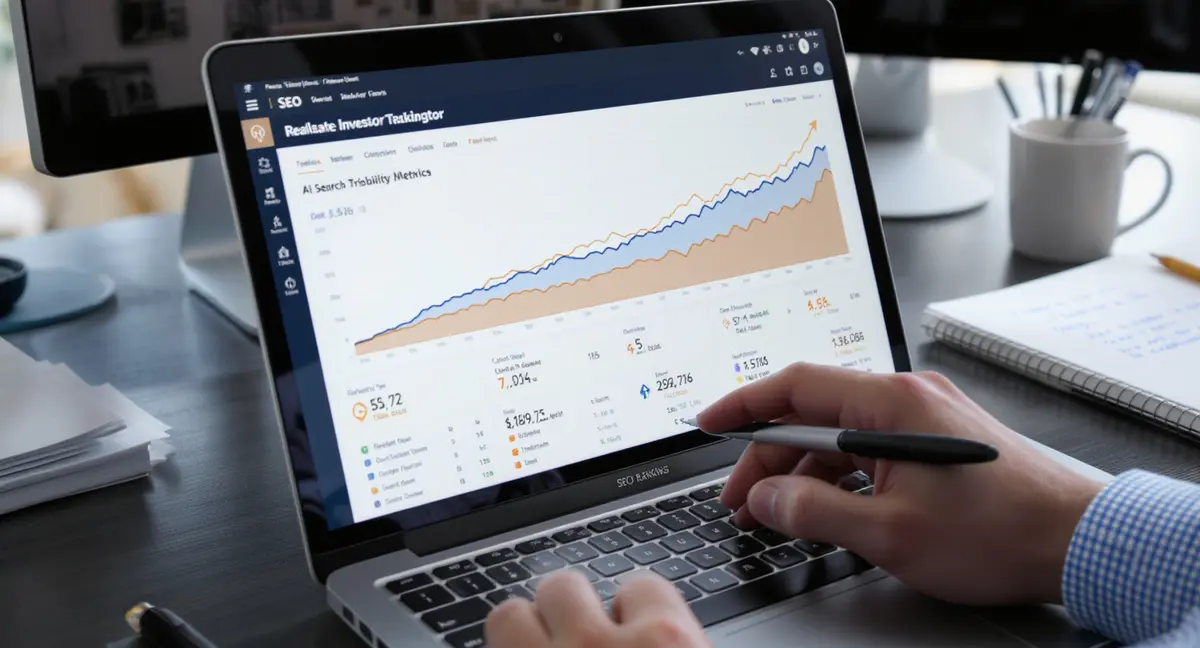
SEO for real estate investors isn't optional anymore. It's the difference between paying $150 per motivated seller lead through direct mail and generating those same leads at $12 each organically. While most investors burn cash on pay-per-click ads and cold calling lists, a small group is building visibility systems that produce deal flow month after month without ongoing ad spend. The gap between those who own their online visibility and those who rent it through agencies or paid ads is widening fast. Most investors attempting to build this visibility infrastructure alone discover they need specialized AI search optimization expertise to compete for citations in ChatGPT and Perplexity results.
Real estate investors face a unique visibility challenge. You're not selling homes, you're buying them, often from distressed sellers who need fast cash solutions. Your SEO strategy can't mirror what agents and brokers do. The search intent is different. The keywords are different. The conversion path is different. And in 2026, AI search platforms like ChatGPT, Perplexity, and Google AI Overviews are reshaping how motivated sellers find cash buyers. If your business isn't visible in those AI-generated answers, you're invisible to half your potential deal flow.
This article breaks down how real estate investors build organic visibility that compounds over time, the specific keyword strategies that attract motivated sellers instead of tire-kickers, and why the investors who install content systems now will dominate their markets for the next decade.
Why SEO for Real Estate Investors Beats Every Other Lead Channel
Real estate investors spend an average of $3,000 to $5,000 per deal on marketing, according to data from real estate investment associations. Direct mail costs $0.50 to $1.50 per piece with response rates under 1%. Cold calling burns through caller time at $25 to $40 per hour for minimal conversions. PPC costs for "sell my house fast" keywords range from $15 to $75 per click in competitive markets, with conversion rates averaging 2% to 4%. Every one of these channels stops producing the moment you stop paying.
Organic search operates differently. SEO for real estate investors builds compounding visibility. A single optimized article about selling an inherited property in your market can generate 50 to 200 qualified leads per year, every year, without additional spend. The math changes completely. Instead of paying per lead indefinitely, you pay once to create the asset, then harvest leads as long as the content ranks. Organic search leads convert at 14.6%, nearly ten times higher than outbound methods, according to Search Engine Journal research.
The Cost Structure That Changes Your Business Model
Consider the lifetime value of organic visibility. An investor spending $4,000 monthly on PPC generates leads only while the budget flows. Stop paying, leads stop arriving. That same $4,000 invested in building owned content infrastructure produces assets that generate leads for 24 to 36 months or longer. The break-even point hits within 6 to 9 months, after which every lead is pure margin.
Investors who track cost per acquisition across channels consistently find organic search delivers the lowest long-term cost. Data from enterprise SEO platform shows organic search drives 53% of all trackable website traffic, yet most real estate investors allocate less than 10% of their marketing budget to building organic visibility. The opportunity gap is massive. Markets where investors haven't yet built SEO infrastructure offer first-mover advantages that won't exist in 18 months.
Lead Quality: Motivated Sellers vs Curiosity Seekers
Not all leads carry equal value. PPC attracts broad intent, people exploring options, comparing offers, testing the market. Organic search attracts problem-aware searchers who've already decided they need a solution. Someone searching "sell inherited house fast Detroit" isn't browsing. They're solving a specific problem right now.
Conversion data supports this. Investors report that organic leads close at 18% to 25% compared to 8% to 12% for paid traffic leads. The search query itself filters intent. Long-tail organic queries like "how to sell house in foreclosure without realtor" signal distress, urgency, and solution-readiness. That's the lead profile real estate investors need. SEO for real estate investors, when executed correctly, attracts exactly that profile at scale.
The Keyword Strategy That Actually Finds Motivated Sellers
Most real estate SEO advice fails investors because it's written for agents selling properties, not investors buying them. The keyword strategy for SEO for real estate investors requires different targeting. You're not competing for "homes for sale in Phoenix." You're targeting distressed seller intent: probate, foreclosure, divorce, inherited property, job relocation, tax liens, code violations, and financial hardship. Investors operating under an LLC structure face additional considerations around entity optimization and local citation consistency that affect search visibility.
Effective investor keyword research starts with problem-state queries. These are searches that reveal a seller's situation, not their aspirations. "Sell my house fast" is the baseline. Layer in distress modifiers: "sell house before foreclosure," "cash for houses divorce," "sell inherited property quickly," "avoid probate selling house." Each modifier narrows the audience and raises intent. According to Ahrefs data, long-tail keywords convert 2.5 times better than broad head terms despite lower search volume.
Local + Distress = High-Intent Traffic
Geographic targeting multiplies effectiveness. A national "we buy houses" campaign competes with every investor and franchise in the country. "We buy houses cash Columbus Ohio" competes with a handful of local players. Add distress: "sell house fast Columbus foreclosure" becomes a micro-market you can own.
Investors operating in multiple markets should build separate content hubs for each geography. A site structure like /columbus/, /cleveland/, /cincinnati/ with geo-specific distress content in each hub signals topical authority to Google and AI search platforms. This structure also supports voice search, where queries like "who buys houses for cash near me" increasingly drive traffic. Voice search grew to represent 27% of mobile searches in 2024, and that share continues climbing.
The Underutilized Power of Solution-Aware Keywords
Beyond distress keywords, solution-aware queries offer massive opportunity. These are searches where the seller already knows cash buyers exist and is evaluating options: "how do cash home buyers work," "difference between iBuyer and local investor," "should I sell to investor or list with agent," "pros and cons selling house as-is."
Content targeting solution-aware keywords builds trust before the seller ever fills out a form. You're educating, not selling. An article titled "What to Expect When You Sell Your House to a Cash Buyer in Atlanta" positions you as the authority while capturing search traffic from sellers researching their options. This content ranks for 12 to 24 months and generates consistent inbound leads. For real estate investors, SEO built on solution-aware content creates a lead engine that runs in the background while you're closing deals.
How AI Search Is Changing Real Estate Investor Visibility Right Now
AI search platforms are rewriting the rules for SEO for real estate investors in 2026. Google AI Overviews now appear in 50% of search results, according to DemandSage research. ChatGPT, Perplexity, and voice assistants like Siri and Alexa pull answers from a curated set of authoritative sources, usually 3 to 5 websites per query. If your site isn't in that group, you're invisible to half the market.
The visibility shift is dramatic. Traditional organic results see a 61% drop in click-through rate when an AI Overview appears above them. But the sites cited inside AI answers see traffic increases of 120x impressions and 800% year-over-year growth, according to BrightEdge 2025 data. The winner-take-most dynamic is already here. Real estate investors who optimize for AI citation now will control their markets. Those who wait will fight for scraps.
What AI Platforms Look for When Choosing Sources
AI models prioritize structured, fact-dense content with clear attribution. Research from Princeton and Georgia Tech published at KDD 2024 found that content with schema markup, section-based formatting, and cited data points improves AI visibility by 30% to 40%. For investors, this means your "sell inherited property" page needs more than keyword repetition. It needs structure: clear H2/H3 headings, FAQ sections, step-by-step processes, and factual claims backed by sources.
Voice search optimization overlaps heavily with AI search. Voice queries are longer and more conversational. Instead of typing "sell house fast," a user asks Siri, "How do I sell my house quickly without a realtor in my area?" Content that answers full questions in natural language gets selected for voice results. For real estate investors, this means writing content that mirrors how distressed sellers actually talk about their problems. Building this level of content infrastructure typically requires professional SEO services designed specifically for investor deal flow, not residential sales.
The Citation Advantage for Local Investors
Local businesses have an edge in AI search that national brands can't replicate. AI platforms favor locally relevant answers for geo-specific queries. When someone asks ChatGPT "who buys houses for cash in Tampa," the model pulls from sources with strong local signals: Google Business Profile data, local citations, city-specific content, and regional backlinks.
Investors who build local content depth, neighborhood guides, market condition updates, local distress trend analysis, create the topical authority AI models reward. A Tampa investor publishing monthly content about Tampa real estate market conditions, foreclosure trends in Hillsborough County, and probate law changes in Florida builds a citation moat. Competitors trying to rank with thin, generic content can't catch up. SEO for real estate investors in 2026 is about building local authority that AI platforms recognize and cite.
On-Page Optimization That Converts Distressed Sellers
Technical optimization matters, but conversion optimization matters more. A perfectly optimized page that doesn't convert traffic into leads is just expensive content. Real estate investors need pages that do both: rank for high-intent keywords and turn visitors into deal flow.
Start with title tags and meta descriptions that speak directly to distress. Instead of "We Buy Houses in Miami," use "Sell Your Miami House Fast for Cash, No Repairs, No Fees, Close in 7 Days." The second version addresses the seller's pain points explicitly. Meta descriptions should reinforce urgency and remove friction: "Facing foreclosure? Inherited a property you don't want? We buy houses in Miami as-is. Get a cash offer in 24 hours." According to Backlinko, title tags that include emotional modifiers and specific benefits increase click-through rates by 20% to 30%.
Content Structure for Maximum Conversion
Page structure determines whether a visitor stays or bounces. Real estate investor landing pages should follow a proven hierarchy: headline with clear value proposition, subheadline addressing objections, trust signals (years in business, deals closed, testimonials), simple lead capture form, benefits list, process explanation, FAQ section, and secondary CTA.
Above-the-fold content must answer three questions instantly: Who are you? What do you offer? Why should I trust you? Distressed sellers are skeptical. They've heard scams. They're worried about getting lowballed. Your page needs to neutralize those fears in the first 200 words. Social proof works: "We've bought 487 houses in Denver since 2018" or "Rated 4.9 stars by 200+ sellers" builds credibility fast. Avoid vague claims like "trusted local buyer" without backing them up.
Mobile Optimization and Page Speed for Investor Sites
Mobile traffic represents 63% of real estate searches, and distressed sellers skew even higher mobile. A site that loads slowly or displays poorly on mobile kills conversions before they start. Google's Core Web Vitals, Largest Contentful Paint, Interaction to Next Paint, and Cumulative Layout Shift, are confirmed ranking factors. Pages that load in under 2 seconds convert 3x better than those taking 5+ seconds.
For real estate investors, this means: compress images, use lazy loading, minimize JavaScript, enable browser caching, and choose fast hosting. Tools like Google PageSpeed Insights identify specific issues. A slow site doesn't just rank worse, it costs you deals. Every second of delay drops conversion rates by 7%, according to industry benchmarks. When a motivated seller is comparing three cash buyers, the one whose site loads fastest and looks most professional wins the call.
Ready to take the next step with Strategyc?
Our team is ready to help you achieve your goals. Get Your Free Scan. While investor SEO targets distressed sellers exclusively, understanding broader real estate SEO principles helps investors identify competitive gaps in their local markets.
Building Topical Authority in Your Investment Market
Google and AI platforms reward topical authority, sites that comprehensively cover a subject area. For real estate investors, this means publishing depth across distress scenarios, local markets, and buyer education. A site with one "we buy houses" page competes poorly against a site with 50 articles covering every distress situation a seller might face.
Topical authority for SEO for real estate investors requires content clusters. Start with a pillar page, thorough guide to selling a house fast for cash in your city. Then build supporting content: how to sell an inherited house, how to avoid foreclosure by selling, selling during divorce, selling a house with code violations, selling rental property with tenants, tax implications of selling to a cash buyer. Each article links back to the pillar and to related articles. This internal linking structure signals to search engines that your site owns this topic.
Content Frequency and Consistency
Publishing frequency matters more than most investors realize. Sites that publish 2 to 4 articles per month see 3.5x more traffic than those publishing sporadically, according to HubSpot's State of Marketing 2024 report. Consistency signals active authority. A site that published 10 articles in 2023 and nothing since looks abandoned. A site publishing weekly looks like the market leader.
For investors, a sustainable cadence is 4 to 8 articles per month: one pillar-style deep dive, two distress-scenario guides, one local market update, and 2 to 4 FAQ or quick-answer posts. This volume builds topical coverage quickly while staying manageable. Platforms like Strategyc's Content & Visibility Engine install publishing systems that produce structured, AI-optimized content at this pace without requiring full-time writers. The system is built on your infrastructure, so you own the content and the process permanently.
The Compounding Effect of Evergreen Content
Real estate investor content compounds in value. An article about selling an inherited property written in 2024 still ranks and generates leads in 2026. Unlike paid ads that stop working the moment you stop paying, evergreen content continues producing returns. The best-performing investor sites have libraries of 100+ articles, each targeting a specific distress keyword or local query. That library becomes a 24/7 lead generation asset.
Content lifespan depends on quality and maintenance. High-quality, well-structured content ranks for 24 to 36 months or longer. Periodic updates, refreshing statistics, adding new sections, improving formatting, extend lifespan indefinitely. Investors who treat content as infrastructure rather than a marketing campaign build compounding visibility that competitors can't replicate quickly. SEO for real estate investors is a long game, but the players who start early dominate their markets for years.
The Structural Advantage of Owned Visibility Systems
Most real estate investors approach SEO the wrong way: they hire an agency, pay a monthly retainer, and hope for results. The agency controls the process, owns the content, and keeps the data. When the investor stops paying, everything stops. That's not ownership. That's dependency. And dependency doesn't scale.
The alternative is building an owned visibility system, infrastructure you control that keeps producing after the initial investment. This means owning your content, your publishing workflow, your keyword strategy, and your performance data. Platforms that install publishing systems rather than offering monthly services align with this model. You pay once to build the engine, then you run it. The leads keep coming whether or not you're paying an ongoing fee.
Why Retainer-Based SEO Fails Investors
SEO agencies churn clients at 38% annually, according to Focus Digital 2025 research. Why? Because most agencies gatekeep the work. The client doesn't know what's being done, can't measure ROI, and feels locked in. Only 8% of marketers feel confident they can measure ROI from their SEO spend, according to Firework 2025 data. For real estate investors operating on tight margins, that's unacceptable.
Retainer-based SEO also misaligns incentives. Agencies profit from keeping you dependent. They have no reason to hand over the system and let you run it yourself. The longer you pay, the more they make. That model works for the agency, not the investor. Real estate investors need infrastructure they own, not services they rent. When visibility is critical to deal flow, it should be an asset on your balance sheet, not a line item on your P&L. The compounding returns from owned content make real estate investing visibility the highest-leverage marketing asset most investors never build.
What an Installed System Looks Like
An owned visibility system includes: keyword research tailored to your markets and distress niches, content production workflows that run without you, on-page optimization that converts traffic to leads, schema markup and structured data for AI visibility, performance tracking that shows which content drives deals, and documentation so you or your team can maintain and expand the system.
Installation typically takes 4 to 6 weeks. After that, the system runs. You control publishing pace, content topics, and budget allocation. If you want to pause for a quarter, you pause, nothing breaks. If you want to ramp up, you ramp up. The system is yours. This is the model behind Strategyc's approach: build the engine, hand over the keys, and let the business owner decide how to run it. For real estate investors who understand the value of compounding assets, this is the only model that makes sense.
The Bottom Line on SEO for Real Estate Investors in 2026
Real estate investors who treat SEO as a rented service will always compete at a disadvantage against those who own their visibility infrastructure. The market is shifting fast. AI search is consolidating visibility into a small group of cited sources. Voice search is growing. Organic lead costs are rising as more investors enter the space. The window to build first-mover advantage in your market is narrowing.
The investors who win are those who install content systems now, build topical authority across distress scenarios and local markets, optimize for AI citation and voice search, and own the infrastructure that produces leads year after year. SEO for real estate investors isn't a tactic, it's the foundation of a scalable, capital-efficient deal machine. Build it right, and it compounds for a decade. Ignore it, and you'll keep paying premium prices for leads your competitors are generating for free.
Frequently Asked Questions
How long does it take to see results from SEO for real estate investors?
Most investors see initial ranking improvements within 8 to 12 weeks and measurable lead flow within 4 to 6 months. Full ROI typically hits between months 9 and 15 as content compounds. Unlike paid ads, results improve over time rather than declining.
Can I build SEO infrastructure in-house or do I need outside help?
You can build in-house if you have time to learn keyword research, content optimization, technical SEO, and schema markup. Most investors find it faster to install a system once and then run it themselves. The key is owning the infrastructure, not outsourcing it permanently.
What's the difference between SEO for investors and SEO for real estate agents?
Investors target distressed seller keywords like foreclosure, probate, and inherited property. Agents target buyer intent like "homes for sale." The keyword strategy, content approach, and conversion paths are completely different. Generic real estate SEO advice fails investors because it's built for agents.
How do I measure ROI from organic content if leads come in months later?
Track leads by source in your CRM. Tag organic leads separately from PPC and direct mail. Measure cost per lead by dividing total content investment by organic leads generated. Most investors find organic CPL drops to $10 to $25 after 12 months, compared to $100+ for paid channels.
Does SEO for real estate investors work in competitive markets?
Yes, but it requires deeper topical coverage and faster execution. Competitive markets reward first-movers who build content libraries before competitors catch on. Local focus and distress-specific targeting let you carve out niches even in crowded cities. The investors who start now own their markets in 18 months.